Altadena Rebuild MEP Checklist After the Eaton Fire
A rebuild or major repair after fire damage needs a coordinated mechanical, electrical, and plumbing sequence instead of isolated trade bids.
These guides are written to help homeowners make better decisions before a repair, replacement, permit, or emergency visit.
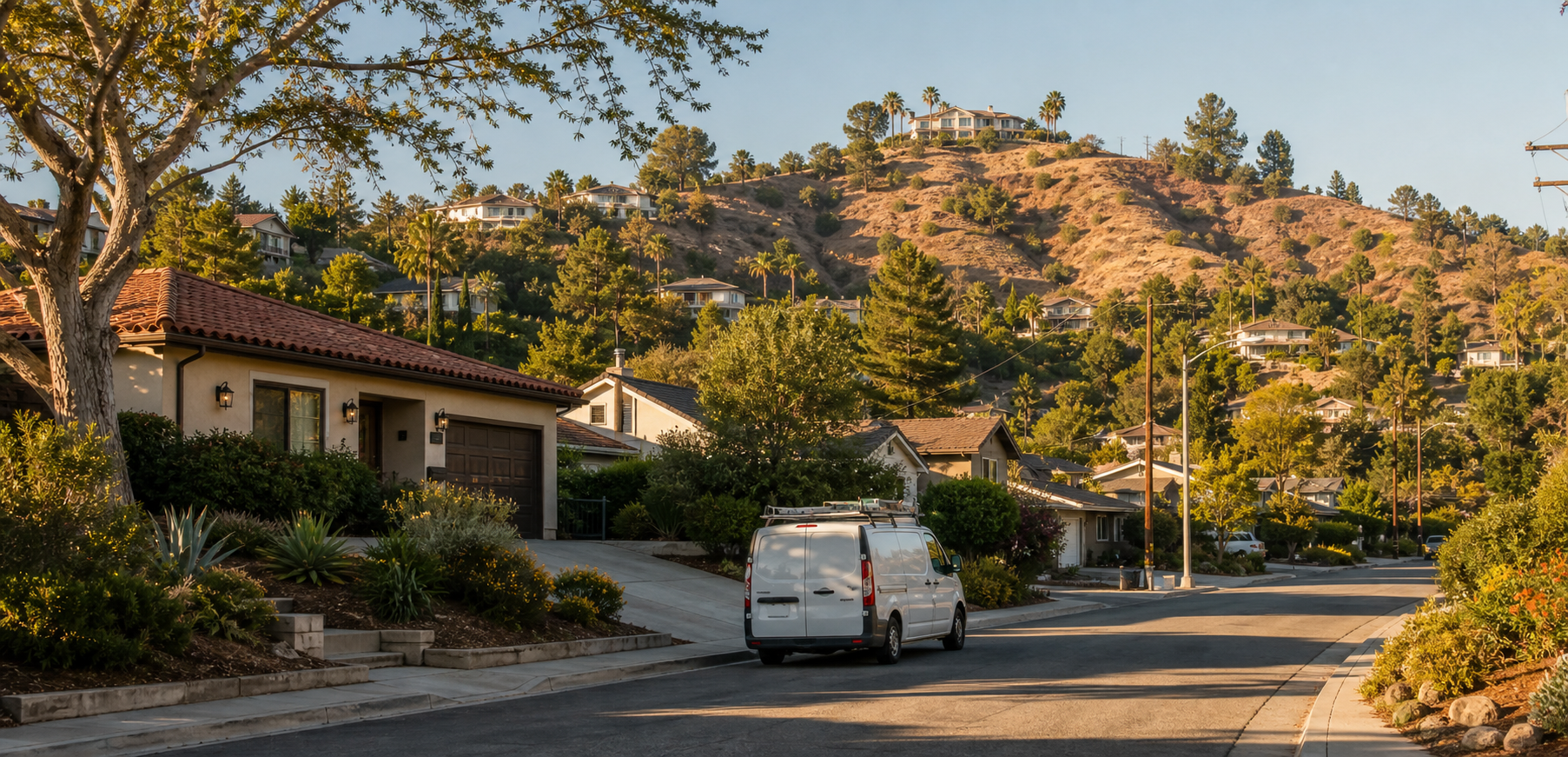
The guide library focuses on questions that affect real scope: panel capacity, old ducts, sewer roots, wildfire smoke, PSPS readiness, old wiring, fire-zone permits, and post-fire rebuilding.
A rebuild or major repair after fire damage needs a coordinated mechanical, electrical, and plumbing sequence instead of isolated trade bids.
The right heat-pump answer depends on load calculation, panel capacity, duct design, future EV charging, and the permit path for the actual parcel.
Repeated AC failures are often airflow and building-load problems hidden behind a part failure.
A post-rain backup needs line history, camera evidence, cleanout access, and root or slope diagnosis before repeat cleaning becomes the default.
Backup power is not only a generator purchase; it is a critical-load and electrical-safety plan.
Old wiring risk is usually a documentation and prioritization problem before it is a demolition problem.
Wildfire smoke response should protect airflow first, then evaluate coils, ducts, filters, returns, and equipment condition.
Fire-zone homes need service planning that accounts for equipment placement, material choices, utility coordination, and documentation before the work starts.
The guides are written for homeowners who need to understand the order of work before they talk to a contractor. They are especially useful when a single symptom touches more than one trade: heat-pump planning and panel capacity, AC failures and old ducts, wildfire smoke and filtration, sewer backups and line condition, outage readiness and transfer equipment, or old wiring and insurance concerns.
Use a guide to build better booking notes. Mention the city, the system, the symptom, access constraints, equipment age, photos you can provide, and whether a remodel, ADU, EV charger, heat pump, water heater, sewer repair, or insurance issue is part of the bigger plan. That helps the first visit produce a clearer recommendation.
No guide can replace parcel-specific diagnosis, utility review, permit review, or testing at the home. The point is to help homeowners recognize the right questions before money is committed. A strong field recommendation should still include evidence: photos, measurements, model labels, panel notes, access notes, safety findings, permit assumptions, and an explanation of repair versus replacement thresholds.
When the guide and field evidence disagree, the field evidence should win. The website gives context; the home decides the scope.
When the scope requires more than one trade, RidgeFlow coordinates the assessment so the homeowner gets one practical order of operations instead of conflicting recommendations.
We explain likely permit and inspection touchpoints, then verify the correct path by parcel before work that requires city or county documentation moves forward.
Yes. The booking link captures the service request cleanly, and the phone CTA is ready for the real number once it is provided.
These visible review bodies are selected with the same page seed used by the JSON-LD review graph, so on-page copy and schema stay in sync.
I took one star off because the arrival window slipped, but the field work and notes were strong. Our Janess Place house had post-Eaton ash documentation, and the ac repair visit included Mitsubishi MSZ-FS09NA zone check, 17-degree temperature split, and cleaned the condenser coil and documented the disconnect. RidgeFlow explained what was proven, what still depended on access, and why airflow came back without pushing a full replacement. The estimate separated make-safe work from the larger upgrade path. The notes were specific enough to compare against another estimate without guessing.
The useful part was that the technician wrote down the evidence instead of selling from memory. Our Oro Vista house had large-lot conduit and pressure-regulator questions, and the thermostat and controls visit included Honeywell Home T10, two remote sensor average, and fixed common-wire behavior and heat-pump lockout settings. RidgeFlow explained what was proven, what still depended on access, and why the controls stopped fighting the equipment. The scope called out what another trade needed to verify before work started. The notes were specific enough to compare against another estimate without guessing.
The useful part was that the technician wrote down the evidence instead of selling from memory. Our Bungalow Heaven house had historic finish protection, and the outlet and switch repair visit included commercial-grade GFCI devices, voltage drop check under load, and found a loose neutral behind a warm device. RidgeFlow explained what was proven, what still depended on access, and why the repair notes explained why resets were unsafe. They wrote down the readings that would change the recommendation. The notes were specific enough to compare against another estimate without guessing.
The useful part was that the technician wrote down the evidence instead of selling from memory. Our Hill Drive house had old grounding and hillside condenser placement, and the sewer line inspection visit included Ridgid SeeSnake camera, six-inch offset joint, and marked depth and route before discussing repair. RidgeFlow explained what was proven, what still depended on access, and why the estimate separated clearing from actual sewer work. They left enough detail for us to compare the plan with a second bid. The notes were specific enough to compare against another estimate without guessing.
Book service through the approved external scheduler or call the RidgeFlow team directly.
Mara Velasquez coordinates HVAC, electrical, and plumbing scopes for older Southern California homes, with field emphasis on load calculations, water-heater venting, panel capacity, sewer access, heat-pump retrofits, wildfire smoke filtration, and permit sequencing.
16+ years coordinating residential HVAC, electrical, and plumbing scopes. Last reviewed May 7, 2026. References used across this site: ASHRAE 62.2-2022, NEC Article 220, Title 24 Part 6, LADBS/Pasadena permit routing.