Water heater repair and replacement
Gas, electric, and heat-pump water heater troubleshooting, replacement planning, seismic strapping, venting, drain pans, expansion, and permit documentation.
Water heaters, tankless systems, drains, sewer camera inspections, leak detection, repiping, fixtures, and emergency plumbing for pressure, slope, and aging-pipe risk. The point is not to sell a single part. It is to make the home work after heat, wind, age, slope, and inspections are accounted for.
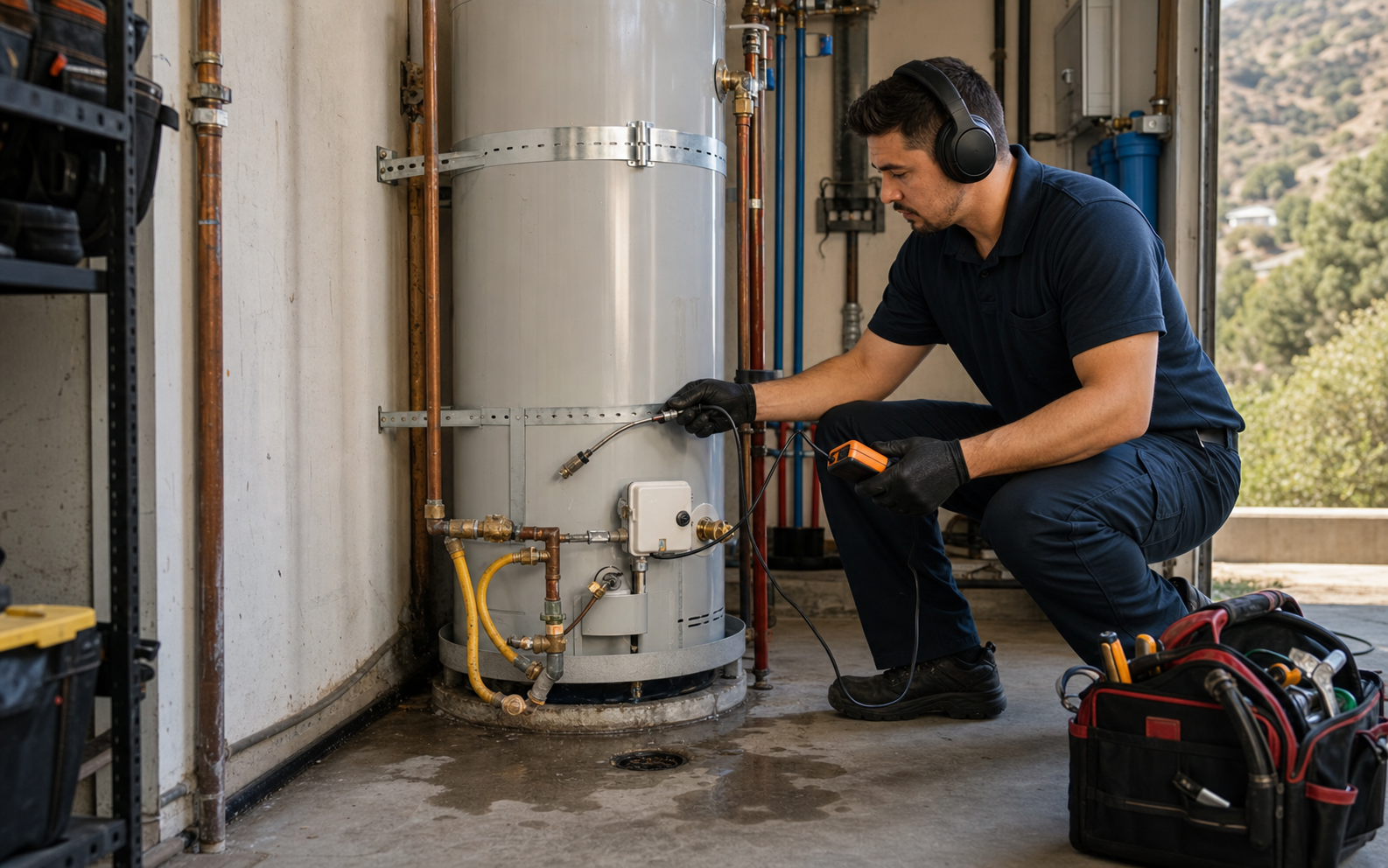
Plumbing work in the foothills needs a practical sequence: diagnose the current failure, check related home systems, identify permit or utility constraints, and then choose repair, replacement, or phased improvement.
Gas, electric, and heat-pump water heater troubleshooting, replacement planning, seismic strapping, venting, drain pans, expansion, and permit documentation.
Tankless installation with gas sizing, venting, condensate, descaling access, electrical outlet, recirculation, and hot-water delivery planning.
Kitchen, bath, laundry, main line, and storm-related drain service with cable, hydro-jetting review, camera inspection, and root or slope diagnosis.
Sewer camera inspection, locating, root intrusion review, cleanout planning, spot repair, trenchless options, slope problems, and post-rain backup prevention.
Hidden leak detection for slab, wall, ceiling, irrigation, pressure, water heater, and supply line issues with moisture, pressure, and acoustic methods.
Whole-home and partial repiping for galvanized, failing copper, pressure issues, remodels, fixture upgrades, and recurring leaks.
Faucets, toilets, disposals, valves, shower trim, hose bibbs, laundry boxes, pressure regulators, and remodel fixture coordination.
Emergency response for burst lines, sewer backups, water heater leaks, no hot water, shutoff failures, ceiling leaks, and pressure problems.
These are the plumbing paths most likely to turn into high-value decisions because they involve urgency, future capacity, old-home constraints, or second-trade dependencies.
hot-water restoration with venting, expansion, seismic, drainage, and fuel or circuit checks. Proof to request: tank age, leak location, venting path.
clearing the stoppage while separating fixture clogs from branch and main-line problems. Proof to request: affected fixtures, cleanout location, backup timing.
camera evidence, locating, and repair choice before paying for excavation or trenchless work. Proof to request: camera footage, line locating, cleanout condition.
source isolation before opening walls, cabinets, slab, ceiling, or finished surfaces. Proof to request: meter movement, pressure behavior, moisture pattern.
Foothill and canyon homes are rarely clean-sheet projects. Heat load, dust, wildfire smoke, old framing, long driveways, mature roots, utility boundaries, and remodel history all shape the work. Plumbing recommendations should therefore name the constraint, not hide it in vague language.
RidgeFlow organizes the decision around safety, comfort, cost, future equipment plans, and inspection readiness. That is especially important where a plumbing project interacts with another trade, such as a heat pump that needs electrical review or a water heater replacement that changes venting and drainage.
A strong plumbing recommendation separates the urgent repair from the long-term plan. Homeowners should see which condition is dangerous, which condition is inconvenient, which condition affects efficiency, and which condition only matters if a future upgrade is planned. That distinction helps avoid both mistakes: ignoring a real safety issue or approving a replacement when a documented repair would be stable.
For plumbing work, the estimate should also identify dependencies outside the trade. HVAC equipment may need electrical capacity and drainage. Electrical upgrades may be driven by HVAC, water-heater, backup-power, or EV plans. Plumbing work may require electrical shutoff awareness, venting review, hardscape planning, or fixture access.
When comparing two proposals, ask which measurements, photos, permit assumptions, and access notes support the recommendation. A clear answer is more valuable than a broad claim about experience.
Pasadena, Sierra Madre, Monrovia, La Canada Flintridge, Glendale, LADBS areas, and LA County unincorporated parcels can follow different permit routes. We do not assume the same rule applies everywhere. We start with parcel context and explain what likely needs verification before work starts.
These deliverables give homeowners a written basis for the next decision. They also make it easier to compare repair, replacement, and phased options across different contractors.
This page uses official and authoritative references where they affect homeowner decisions: LA County Building and Safety permits, Pasadena Permit Center Online, California Energy Commission building energy standards.
When the scope requires more than one trade, RidgeFlow coordinates the assessment so the homeowner gets one practical order of operations instead of conflicting recommendations.
We explain likely permit and inspection touchpoints, then verify the correct path by parcel before work that requires city or county documentation moves forward.
Yes. The booking link captures the service request cleanly, and the phone CTA is ready for the real number once it is provided.
These visible review bodies are selected with the same page seed used by the JSON-LD review graph, so on-page copy and schema stay in sync.
The useful part was that the technician wrote down the evidence instead of selling from memory. Our Linda Vista house had hillside staging and PWP coordination, and the whole-home rewiring visit included Eaton CH breakers, AFCI/GFCI correction list, and separated ungrounded circuits from a remodel shortcut. RidgeFlow explained what was proven, what still depended on access, and why the scope was phased room by room instead of vague. They also named the access photos that mattered before any return visit. The notes were specific enough to compare against another estimate without guessing.
The useful part was that the technician wrote down the evidence instead of selling from memory. Our Paradise Canyon house had fire-zone placement and long drives, and the tankless water heater planning visit included Navien NPE-240A2, 199k BTU gas-sizing review, and checked vent length, condensate, and electrical outlet. RidgeFlow explained what was proven, what still depended on access, and why they were honest that tankless was not automatic. They included the staging constraint instead of pretending the house was easy to reach. The notes were specific enough to compare against another estimate without guessing.
The useful part was that the technician wrote down the evidence instead of selling from memory. Our Oro Vista house had large-lot conduit and pressure-regulator questions, and the emergency plumbing visit included water shutoff and moisture mapping, 38-minute stabilization window, and protected electrical areas before tracing the leak. RidgeFlow explained what was proven, what still depended on access, and why the follow-up scope was clear after the make-safe visit. The estimate separated make-safe work from the larger upgrade path. The notes were specific enough to compare against another estimate without guessing.
The useful part was that the technician wrote down the evidence instead of selling from memory. Our Adams Hill house had ADU circuits and tight equipment paths, and the repiping planning visit included Type L copper and PEX comparison, 68 PSI regulator setting, and mapped branch lines before cutting walls. RidgeFlow explained what was proven, what still depended on access, and why the phased plan protected finishes. The scope called out what another trade needed to verify before work started. The notes were specific enough to compare against another estimate without guessing.
Book service through the approved external scheduler or call the RidgeFlow team directly.
Mara Velasquez coordinates HVAC, electrical, and plumbing scopes for older Southern California homes, with field emphasis on load calculations, water-heater venting, panel capacity, sewer access, heat-pump retrofits, wildfire smoke filtration, and permit sequencing.
16+ years coordinating residential HVAC, electrical, and plumbing scopes. Last reviewed May 7, 2026. References used across this site: ASHRAE 62.2-2022, NEC Article 220, Title 24 Part 6, LADBS/Pasadena permit routing.