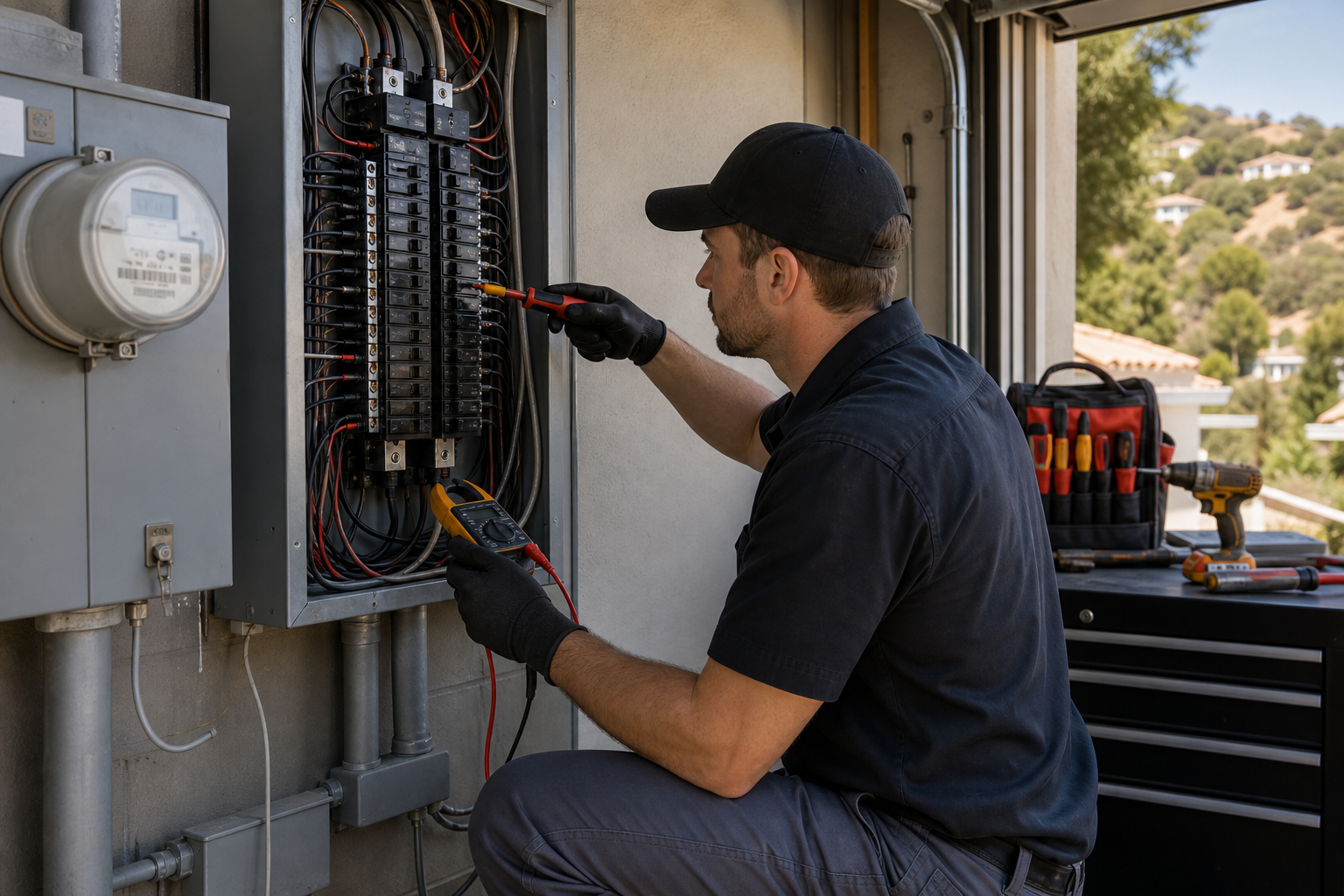
san-rafael-hills-ev-charger-installation-opening: San Rafael Hills notes below tie ev charger installation to address facts, proof points, and local constraints before a price claim appears.
Notebook san-rafael-hills-ev-charger-installation-01: san-rafael-hills price lens, Glenoaks edge. Local: GWP context. Risk: old panels. Proof: panel space. Symptom: slow Level 1. RidgeFlow gate: choose breaker and.
Notebook san-rafael-hills-ev-charger-installation-02: Owner side: panel near capacity, Arroyo crest access, leak isolation, electrical partial. Technician side: load management, long conduit runs, calculate load. san-rafael-hills outcome: power that is safe.
Notebook san-rafael-hills-ev-charger-installation-03: ev-charger-installation bid screen for san-rafael-hills: start with shared driveway, add conduit route, test charger weather exposure, then ask how wooded drainage changes labor. Avoid quoting charger amperage before.
Notebook san-rafael-hills-ev-charger-installation-04: Colorado Street bridge area and San Rafael Avenue split the san-rafael-hills story. narrow roads changes access; garage subpanel limits changes scope. For ev-charger-installation, load calculation is the proof and calculate is the action.
Notebook san-rafael-hills-ev-charger-installation-05: ev-charger-installation bid screen for san-rafael-hills: start with new EV purchase, add conduit route, test garage subpanel limits, then ask how wooded drainage changes labor. Avoid quoting charger amperage before.
Notebook san-rafael-hills-ev-charger-installation-06: Arroyo crest and Glenoaks edge split the san-rafael-hills story. narrow roads changes access; old panels changes scope. For ev-charger-installation, load calculation is the proof and calculate is the action.
Notebook san-rafael-hills-ev-charger-installation-07: San Rafael Hills wording for ev-charger-installation: San Rafael Avenue, root pressure, HOA parking rules, charger amperage. That mix supports narrow repair, staged work, or another local next step.
Notebook san-rafael-hills-ev-charger-installation-08: san-rafael-hills report, "shared driveway," should trigger a Colorado Street bridge area question. Possible blockers: old hillside wiring, charger weather exposure, Pasadena Water and Power,. Quote logic ties parking control to test charging behavior.
Notebook san-rafael-hills-ev-charger-installation-09: San Rafael Hills wording for ev-charger-installation: Glenoaks edge, root pressure, charger weather exposure, charger amperage. That mix supports narrow repair, staged work, or another local next step.
Notebook san-rafael-hills-ev-charger-installation-10: Owner side: slow Level 1, Arroyo crest access, leak isolation, electrical partial. Technician side: load management, old panels, choose breaker and. san-rafael-hills outcome: power that is safe.
Notebook san-rafael-hills-ev-charger-installation-11: san-rafael-hills report, "detached garage," should trigger a Colorado Street bridge area question. Possible blockers: old hillside wiring, HOA parking rules, Pasadena Water and Power,. Quote logic ties parking control to confirm charger specs.
Notebook san-rafael-hills-ev-charger-installation-12: San Rafael Hills wording for ev-charger-installation: San Rafael Avenue, root pressure, long conduit runs, charger amperage. That mix supports narrow repair, staged work, or another local next step.
Notebook san-rafael-hills-ev-charger-installation-13: Arroyo crest and Glenoaks edge split the san-rafael-hills story. narrow roads changes access; garage subpanel limits changes scope. For ev-charger-installation, load calculation is the proof and calculate is the action.
Notebook san-rafael-hills-ev-charger-installation-14: ev-charger-installation bid screen for san-rafael-hills: start with shared driveway, add conduit route, test charger weather exposure, then ask how wooded drainage changes labor. Avoid quoting charger amperage before.
Notebook san-rafael-hills-ev-charger-installation-15: Owner side: panel near capacity, Colorado Street bridge area access, leak isolation, electrical partial. Technician side: load management, long conduit runs, calculate load. san-rafael-hills outcome: power that is safe.
Notebook san-rafael-hills-ev-charger-installation-16: san-rafael-hills price lens, San Rafael Avenue. Local: GWP context. Risk: old panels. Proof: panel space. Symptom: slow Level 1. RidgeFlow gate: choose breaker and.
Notebook san-rafael-hills-ev-charger-installation-17: san-rafael-hills report, "shared driveway," should trigger a Arroyo crest question. Possible blockers: old hillside wiring, charger weather exposure, Pasadena Water and Power,. Quote logic ties parking control to test charging behavior.
Notebook san-rafael-hills-ev-charger-installation-18: San Rafael Hills wording for ev-charger-installation: Glenoaks edge, root pressure, HOA parking rules, charger amperage. That mix supports narrow repair, staged work, or another local next step.
Notebook san-rafael-hills-ev-charger-installation-19: san-rafael-hills report, "shared driveway," should trigger a Colorado Street bridge area question. Possible blockers: old hillside wiring, charger weather exposure, Pasadena Water and Power,. Quote logic ties parking control to test charging behavior.
Notebook san-rafael-hills-ev-charger-installation-20: San Rafael Hills wording for ev-charger-installation: San Rafael Avenue, root pressure, HOA parking rules, charger amperage. That mix supports narrow repair, staged work, or another local next step.
Notebook san-rafael-hills-ev-charger-installation-21: san-rafael-hills price lens, San Rafael Avenue. Local: GWP context. Risk: old panels. Proof: panel space. Symptom: slow Level 1. RidgeFlow gate: choose breaker and.
Notebook san-rafael-hills-ev-charger-installation-22: Owner side: panel near capacity, Colorado Street bridge area access, leak isolation, electrical partial. Technician side: load management, long conduit runs, calculate load. san-rafael-hills outcome: power that is safe.
Notebook san-rafael-hills-ev-charger-installation-23: San Rafael Hills wording for ev-charger-installation: Glenoaks edge, root pressure, HOA parking rules, charger amperage. That mix supports narrow repair, staged work, or another local next step.
Notebook san-rafael-hills-ev-charger-installation-24: san-rafael-hills report, "shared driveway," should trigger a Arroyo crest question. Possible blockers: old hillside wiring, charger weather exposure, Pasadena Water and Power,. Quote logic ties parking control to test charging behavior.
Notebook san-rafael-hills-ev-charger-installation-25: ev-charger-installation bid screen for san-rafael-hills: start with new EV purchase, add conduit route, test garage subpanel limits, then ask how wooded drainage changes labor. Avoid quoting charger amperage before.
Notebook san-rafael-hills-ev-charger-installation-26: Colorado Street bridge area and San Rafael Avenue split the san-rafael-hills story. narrow roads changes access; old panels changes scope. For ev-charger-installation, load calculation is the proof and calculate is the action.
Notebook san-rafael-hills-ev-charger-installation-27: san-rafael-hills price lens, Glenoaks edge. Local: GWP context. Risk: long conduit runs. Proof: panel space. Symptom: panel near capacity. RidgeFlow gate: calculate load.
Notebook san-rafael-hills-ev-charger-installation-28: Owner side: detached garage, Arroyo crest access, leak isolation, electrical partial. Technician side: load management, HOA parking rules, confirm charger specs. san-rafael-hills outcome: power that is safe.
Notebook san-rafael-hills-ev-charger-installation-29: San Rafael Hills wording for ev-charger-installation: San Rafael Avenue, root pressure, charger weather exposure, charger amperage. That mix supports narrow repair, staged work, or another local next step.
Notebook san-rafael-hills-ev-charger-installation-30: san-rafael-hills report, "new EV purchase," should trigger a Colorado Street bridge area question. Possible blockers: old hillside wiring, garage subpanel limits, Pasadena Water and Power,. Quote logic ties parking control to mount weather-ready equipment.
Notebook san-rafael-hills-ev-charger-installation-31: san-rafael-hills report, "new EV purchase," should trigger a Arroyo crest question. Possible blockers: old hillside wiring, garage subpanel limits, Pasadena Water and Power,. Quote logic ties parking control to mount weather-ready equipment.
Notebook san-rafael-hills-ev-charger-installation-32: San Rafael Hills wording for ev-charger-installation: Glenoaks edge, root pressure, charger weather exposure, charger amperage. That mix supports narrow repair, staged work, or another local next step.